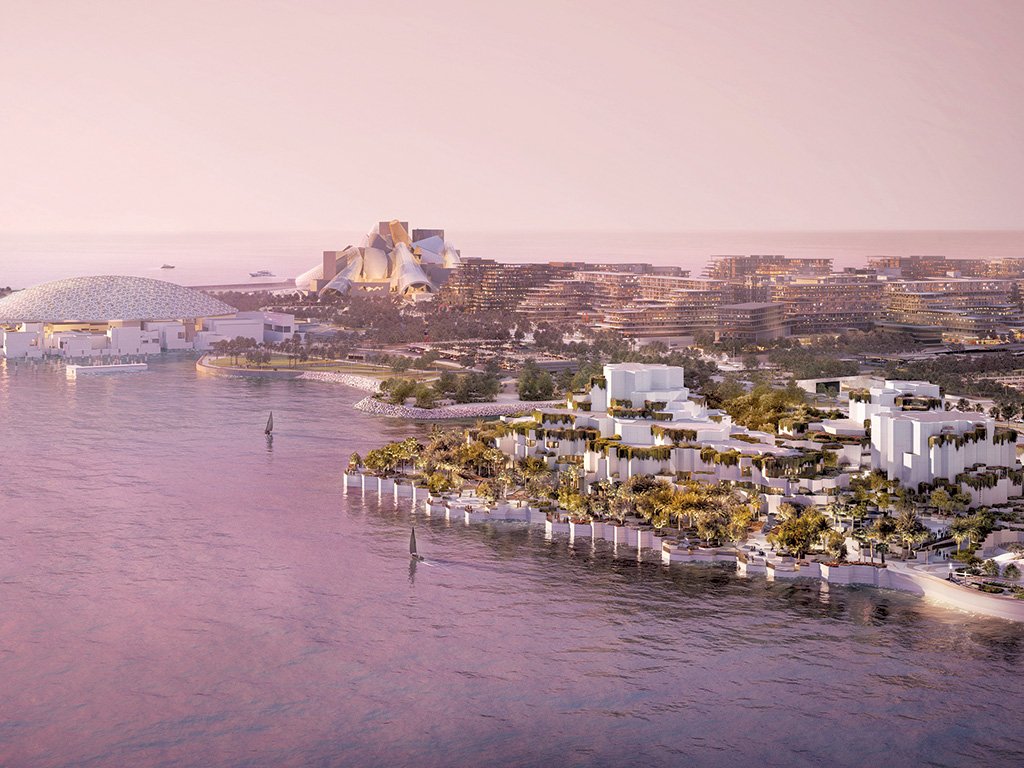
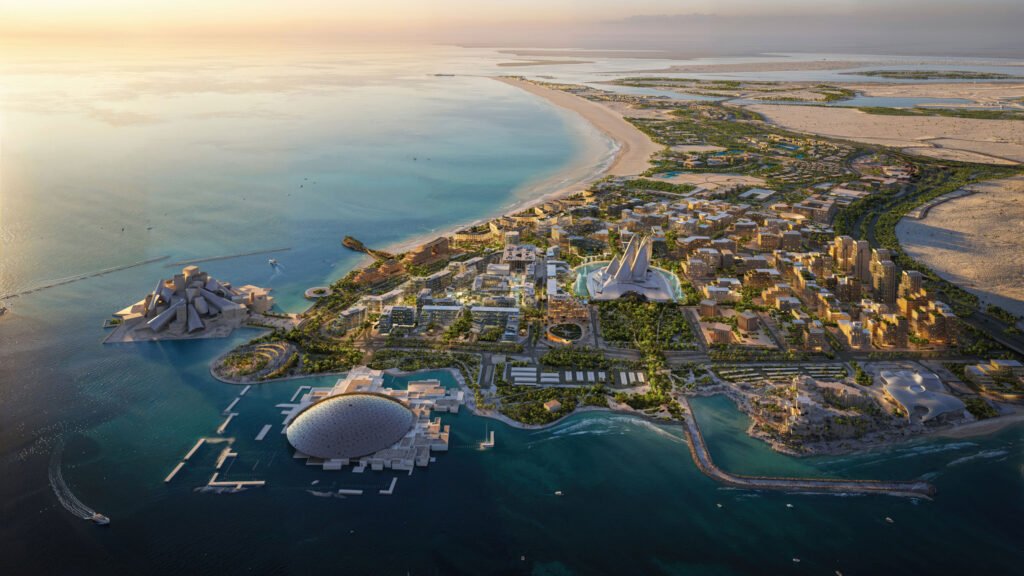
I had the privilege to walk from Louvre Abu Dhabi to the Natural History Museum Abu Dhabi and from there towards Zayed National Museum. As I moved through Saadiyat Island Cultural District it felt like walking within a triangle where ideas, conversations and history quietly meet. This triangle is not formed only by architecture but by meaning. It connects the natural story of the planet, the international journey of humanity and the national evolving identity of the United Arab Emirates within a single cultural landscape.
Saadiyat Island Cultural District represents a carefully considered vision rather than a collection of individual landmarks. Located just off the coast of Abu Dhabi the island reflects a national belief that culture, education and knowledge must stand at the centre of long-term development. As an educator at Louvre Abu Dhabi, I often see how visitors respond to this environment not as tourists moving between buildings but as learners moving between ideas. The district encourages reflection simply through its layout where open spaces shared walkways and visual connections allow one institution to speak naturally to another.
The foundation of this cultural landscape is closely connected to Abu Dhabi Vision 2030. This vision places strong emphasis on building a knowledge-based society that values sustainability, openness and intellectual growth. Culture within this framework is not decorative. It is strategic. Museums here are designed as active educational spaces where learning takes place across generations, disciplines and backgrounds. Saadiyat Island is therefore not only about preserving the past but about preparing minds for the future.
Within this setting the relationship between the Natural History Museum Abu Dhabi, Louvre Abu Dhabi and Zayed National Museum becomes especially meaningful. Together they form a continuous narrative. The Natural History Museum speaks about the birth of the planet, the universe and the long story of creation. It reminds us that life began long before humanity and that our existence is part of a much larger natural system shaped over billions of years. This scientific perspective gives visitors a sense of scale, humility and responsibility towards the planet we inhabit.
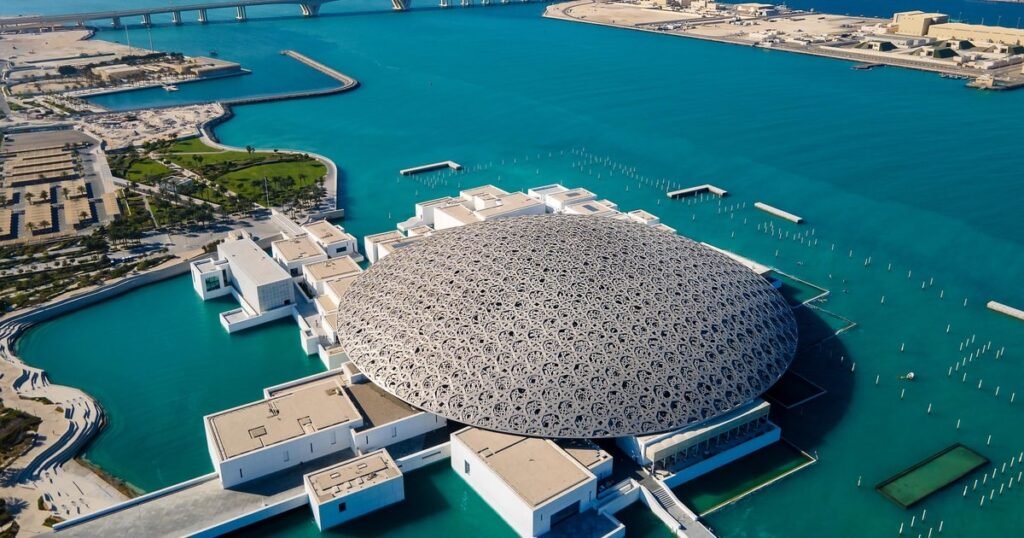
Moving from the Natural History Museum to Louvre Abu Dhabi the focus shifts from the planet to humanity itself. Louvre Abu Dhabi speaks about the international story of humanity. Through art, objects and ideas it shows how different civilizations across time have expressed belief, power, creativity and identity. Here humanity is not divided by geography or chronology but connected through shared questions and experiences. As an educator I often observe how this international approach helps visitors understand that while cultures may differ the human impulse to create meaning is deeply shared.
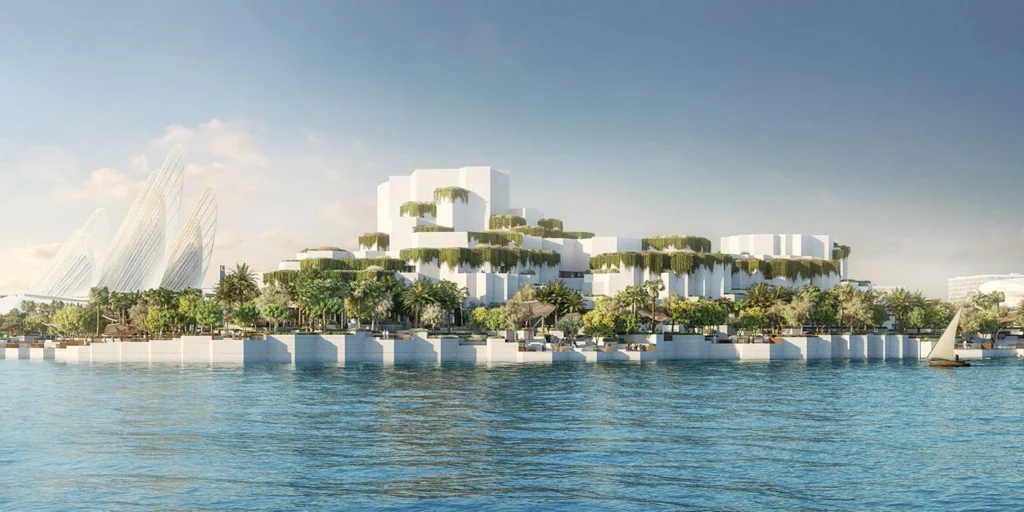
Zayed National Museum completes this triangle by grounding the global narrative within a specific national context. It focuses on the history, values and vision of the United Arab Emirates and the legacy of the late Sheikh Zayed bin Sultan Al Nahyan. What makes this museum especially powerful is how it grows within the surrounding narratives of nature and international universality. The story of the United Arab Emirates is presented as one shaped by environment, community, leadership and openness to the world.
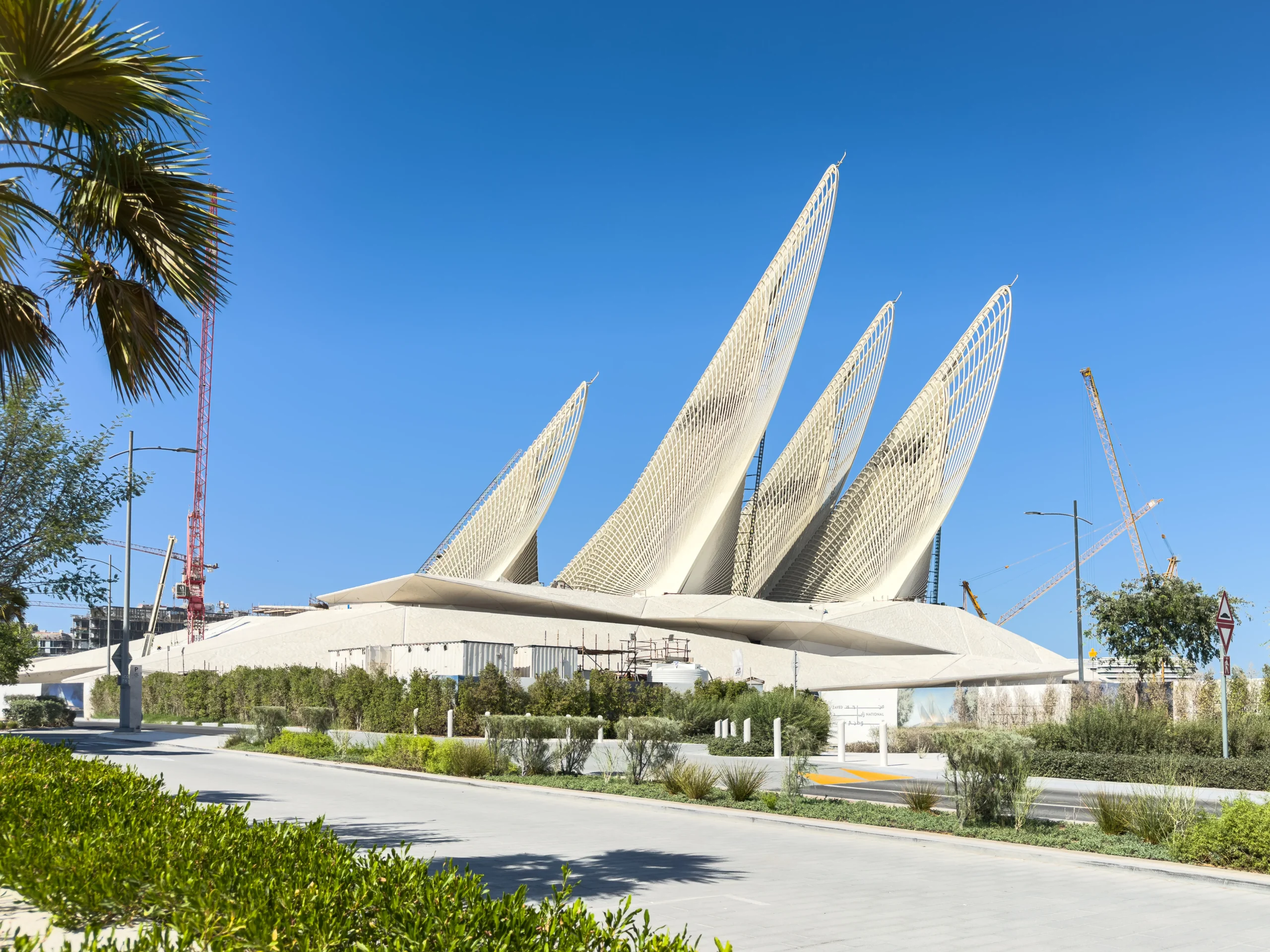
This relationship is significant. Zayed National Museum exists within nature as explained by the Natural History Museum and through international universality as explored by Louvre Abu Dhabi. It reflects how local culture develops not in isolation but through interaction, exchange and understanding. Today nearly two hundred nationalities live together in the United Arab Emirates, and this reality is deeply connected to the values presented within the museum. Zayed National Museum therefore speaks not only about the past but about a future vision of coexistence, growth and shared responsibility.
Walking this triangle is both a physical and intellectual experience. Visitors can move from the origins of the natural universe to the shared international story of humanity and then to the national narrative of the UAE within a single journey. Few places in the world allow such a layered understanding of existence within one cultural district. The collections of these museums often echo one another. Themes of creation, adaptation, belief, innovation and survival appear repeatedly encouraging visitors to make connections and comparisons naturally.
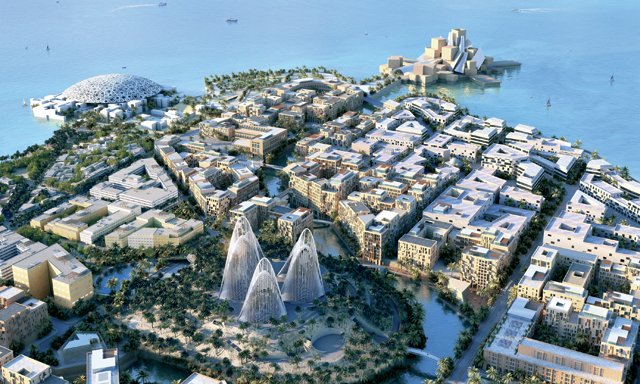
Saadiyat Island becomes a place where nature, international art and national cultural growth meet. The Natural History Museum grounds us in science and the natural world. Louvre Abu Dhabi elevates human creativity and international shared experience. Zayed National Museum anchor’s identity, values and future direction. Together they create a balanced dialogue between where we come from, who we are and where we are going.
This cultural triangle reflects the broader ambition of Abu Dhabi Vision 2030 which seeks to build a society that is informed, open and forward-looking. For students it offers context. For academics it offers connection. For the public it offers understanding. And for professionals it offers a model of how culture, education and vision can work together.
As an educator it is a privilege to witness how these conversations unfold every day not only within museum galleries but in the minds of those who walk between them. Saadiyat Island Cultural District is not a finished statement. It is a living one where knowledge continues to grow just like the society it represents. Here, the Natural story of the planet, the international story of humanity and the National story of the United Arab Emirates converge, creating a unique cultural triangle where nature, art and the growth of civilization meet in dialogue and reflection.