
As someone working in the museum education field, I often explain history through objects and dates. Islamic art is one of the clearest examples of how objects can travel, carry meaning and connect people across time and place. Islamic art is not fixed in one land. It moved with people, ideas, trade and belief. Its journey tells a story of exchange, learning and cultural connection that continues today through museums and education.
What Is Islamic Art?
Islamic art refers to the art created in regions were Islam shaped culture and daily life. It is important to understand that Islamic art is not only religious. It includes art made for mosques but also objects used in homes, schools, market, and royal courts. These objects include buildings, manuscripts, calligraphy, pottery, textiles, carpets, metalwork, woodwork and glass.
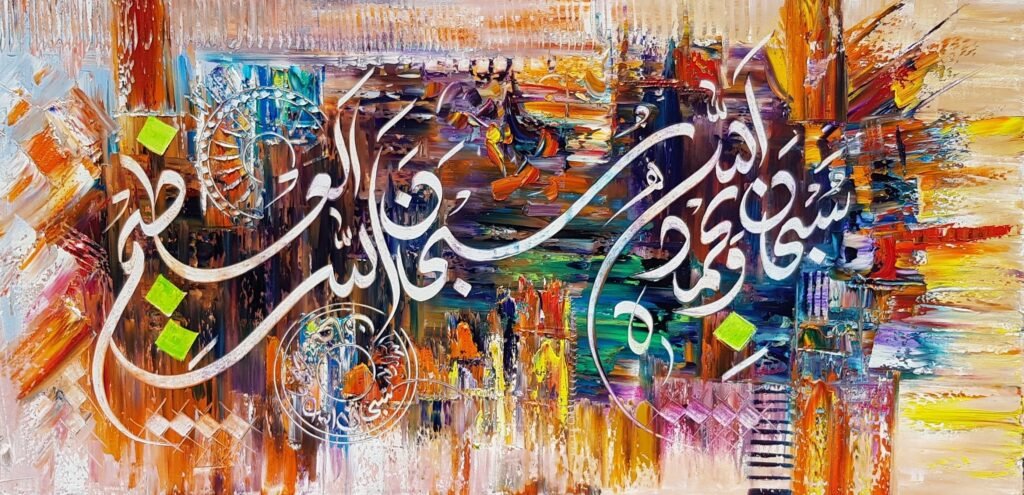
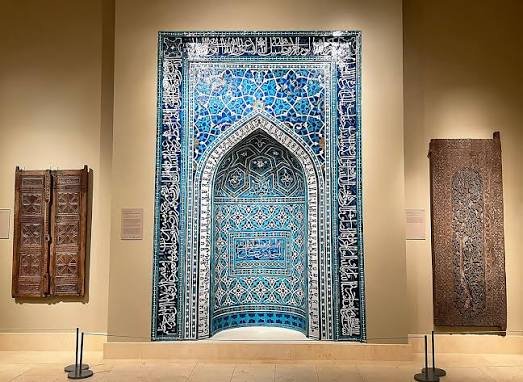
One strong feature of Islamic art is the focus on design. Artists often avoided showing human figures in religious spaces. Instead, they used Arabic calligraphy, geometric patterns and plant designs. These elements repeat and flow, creating a feeling of balance and order. This style made Islamic art easy to adapt and travel, because patterns and scripts could be reshaped for different cultures and materials.
When Did Islamic Art Begin?
Islamic art began in the 7th century, following the rise of Islam in the Arabian Peninsula. As Islam spread beyond Arabia, it reached new lands such as Egypt, Syria, Iraq, Persia, North Africa, Spain, Central Asia and later South and Southeast Asia.
Each of these regions already had strong artistic traditions. Islamic art did not erase them. Instead, it absorbed local ideas, materials and skills. This blending is one reason Islamic art became so rich and varied while still keeping shared features.
What Does Islamic Art Include?
Islamic art includes many forms, such as:
- Religious and public architecture
- Calligraphy using Arabic script
- Repeating geometric designs
- Floral and plant patterns
- Ceramics and tiles
- Carpets and textiles
- Metal and wood objects
- Manuscripts and illustrated books
These objects were not only beautiful. They were part of daily life, education, worship and trade.
The Traveling Pattern of Islamic Art
The traveling pattern of Islamic art is very important and it is the reason behind its influence. Islamic art grew through movement. Ideas did not stay in one place. They moved with people.
Trade and Trade Routes
Trade was one of the strongest forces behind the spread of Islamic art. Muslim traders travelled across land and sea, connecting Africa, Asia and Europe. Along trade routes, objects such as textiles, ceramics and metalwork were exchanged. With these objects came ideas about design, technique and materials.
For example, Islamic potters learned from Chinese porcelain through long distance trade. In return, Islamic designs influenced pottery made in other regions. Trade ports and market cities became places where styles mixed and changed.
Cities as Cultural Centres
Major cities such as Mecca, Medina, Cairo, Baghdad, Damascus, Cordoba and Istanbul became centres of learning and art. Artists moved to these cities to find work, training and support. When they later returned home or moved elsewhere they carried styles and skills with them.
Empires and Political Movement
Islamic empires played a major role in spreading art. When empires expanded, they brought architects, calligraphers and craftspeople to new regions. Rulers supported art as a sign of power and identity. However, local artists always added their own traditions. This is why Islamic art from Egypt looks different from Islamic art from Persia or India even though they share common elements.
Pilgrimage and Religious Travel
Pilgrimage, especially the journey to Mecca brought together people from across the Islamic world. Pilgrims shared objects, ideas and artistic tastes. Many returned home inspired by what they had seen influencing local art and architecture.
Movement of Knowledge and Skills
Islamic art also travelled through teaching. Calligraphers trained students. Builders passed down methods. Manuscripts moved between libraries and schools. This human movement helped keep artistic traditions alive across centuries.
Because of all this movement Islamic art became flexible and open. It adapted without losing its identity.
Influence of Islamic Art on the World
Islamic art influenced many cultures beyond Islamic lands. In Europe Islamic designs influenced architecture, textiles and decoration especially in Spain and the Mediterranean. In Asia Islamic art blended with local styles to create new forms of expression.
Islamic manuscripts preserved knowledge in science, medicine, math and philosophy. These works later influenced global learning. Even today, Islamic patterns and calligraphy inspire modern designers and artists.
The Role of Islamic Museums in Preservation and Education
Islamic museums play a very important role in preserving Islamic art and explaining its long journey across the world. Because Islamic art travelled through many regions, museums help collect these objects in one place and tell their stories clearly. They protect fragile artworks, study their history and help the public understand how art connects cultures.
In the museum education field Islamic museums are especially important. They help visitors see Islamic art not as something distant or unfamiliar but as a shared human heritage. Through exhibitions, guided tours, school programs and digital platforms these museums explain how Islamic art moved from one place to another and changed over time.
Museums also support conservation. Many Islamic artworks are made of paper, wood, textiles and glass which need special care. Conservation teams work carefully to preserve these objects while respecting their original materials and meaning.
Topmost Important Islamic Museums in the World
The Museum of Islamic Art, Cairo (Egypt)
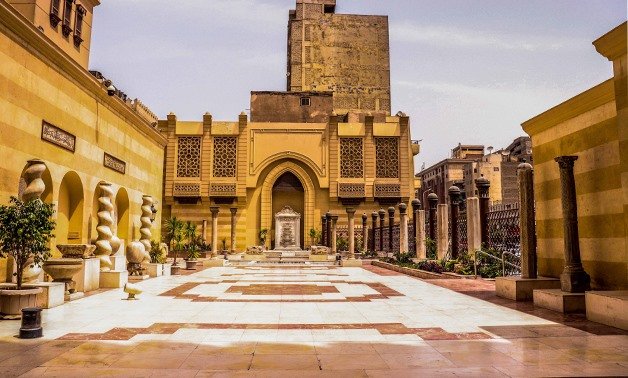
The Museum of Islamic Art in Cairo is one of the oldest and most important Islamic museums in the world. Its collection represents many centuries of Islamic history and includes objects from Egypt, North Africa, the Middle East, Iran, Central Asia and beyond.
Egypt has always been a key meeting point between Africa, Asia and the Mediterranean. This makes the museum especially important for understanding how Islamic art travelled. The objects show how styles moved through Egypt and were reshaped by local artists.
The museum also has a strong educational role. It supports research, school visits and public programs that explain Islamic art as part of daily life, science, religion and culture not just decoration.
The Museum of Islamic Art, Doha (Qatar)
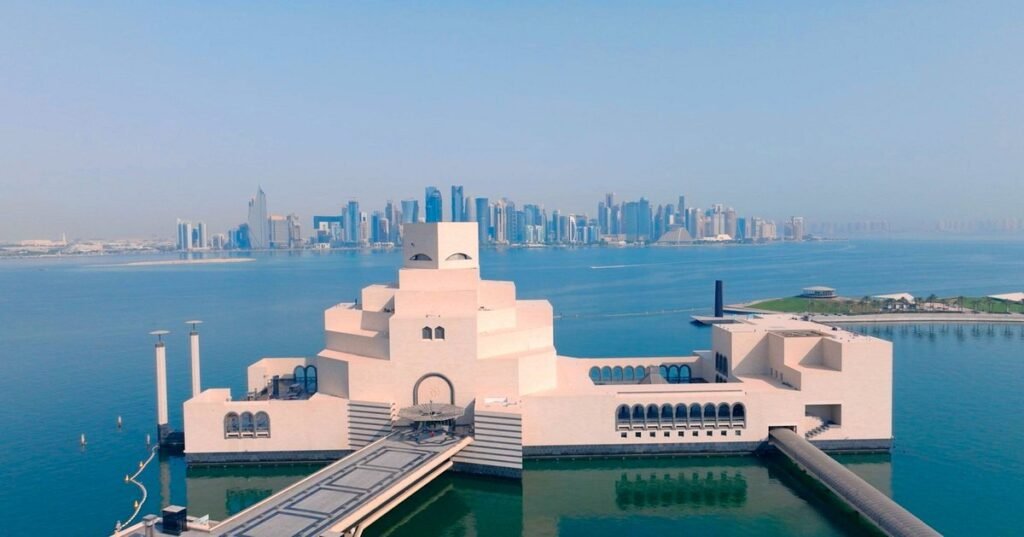
The Museum of Islamic Art in Doha is one of the most influential Islamic art museums today. Its collection covers more than a thousand years and includes objects from across the Islamic world.
The museum clearly shows how Islamic art travelled across regions. Visitors can see similarities and differences between objects made in Spain, Iran, Turkey, India and Central Asia. Education is a major focus, with exhibitions designed to explain movement, exchange and cultural connection.
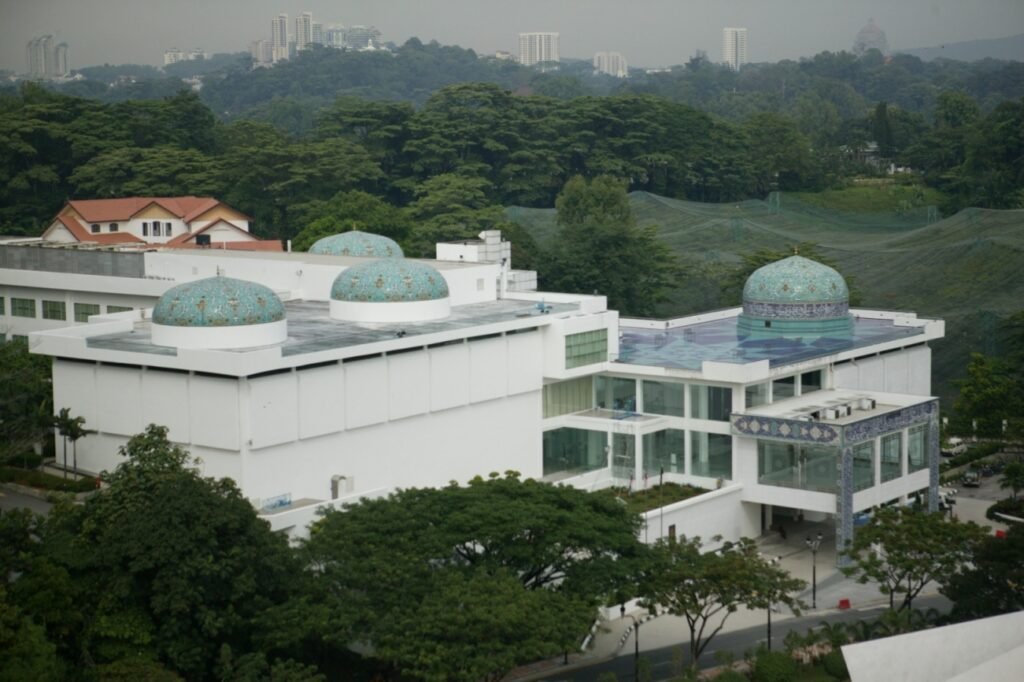
The Islamic Arts Museum Malaysia, Kuala Lumpur (Malaysia)
This museum is one of the most important Islamic museums in Asia. It shows how Islamic art travelled far beyond the Middle East and became part of Asian cultures.
The museum highlights Islamic architecture, manuscripts, textiles and decorative arts from Southeast Asia and other regions. Its displays are clear and visitor-friendly making it strong in museum education. It helps audiences understand Islamic art as global not limited to one region.
Together these museums help protect the traveling story of Islamic art. They collect objects that were once part of trade routes, cities, homes and religious spaces. Through conservation and education they keep these objects alive and meaningful.
For those working in museum education these institutions show how museums can explain movement, exchange and cultural connection through art. They help people understand that Islamic art is not fixed in one place but shaped by travel, people and shared creativity.
Islamic art is a story of travel. It moved with traders, pilgrims, scholars and artists. It crossed borders, adapted to new cultures and connected distant lands. Its patterns, scripts and designs show how ideas can travel without losing their meaning.
Museums, especially Islamic museums in Egypt and around the world, help preserve this journey. Through conservation and education, they keep the story alive. For those working in museum education Islamic art offers a powerful way to teach about movement, exchange and shared human creativity.